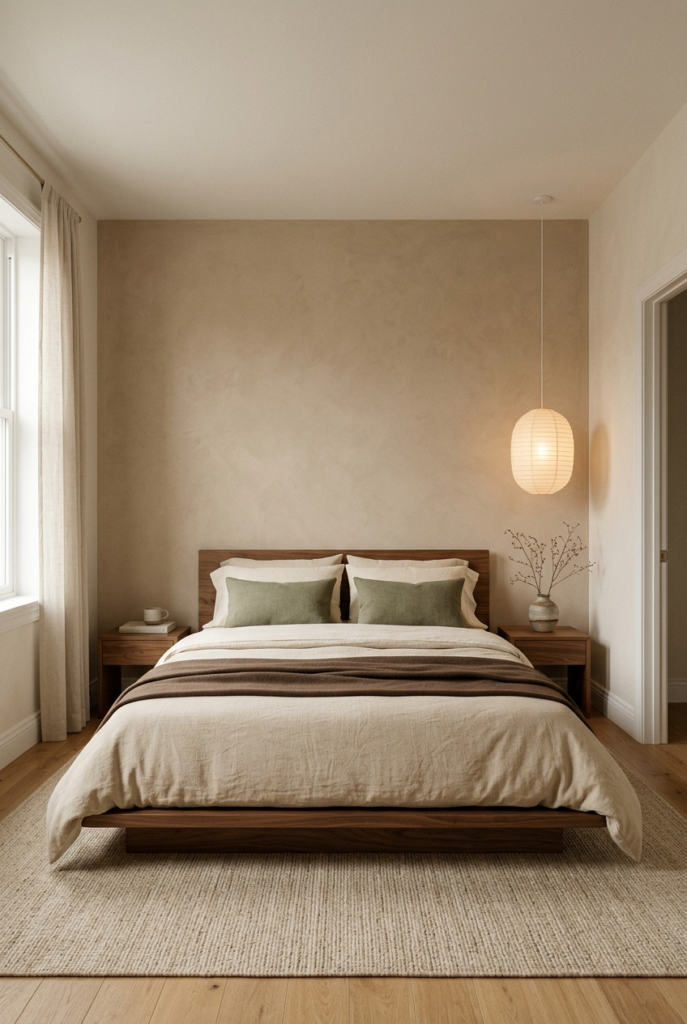
15 Small Bedroom Ideas for 2026 That Make the Most of Every Inch
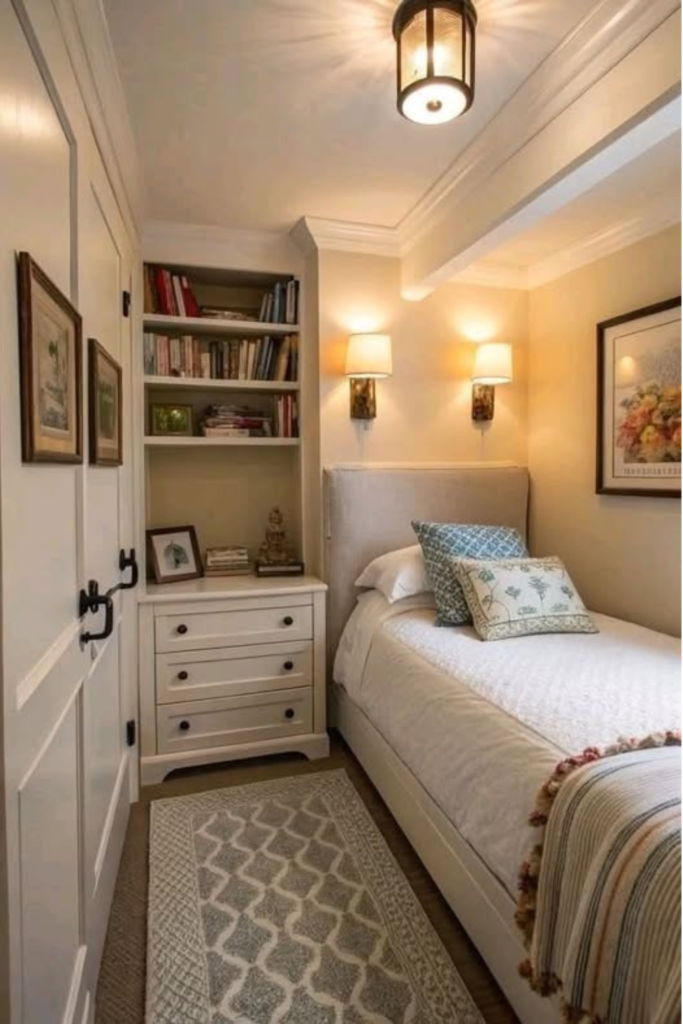
1. Make Every Inch Count With Built-In Bedside Storage
When your bedroom is barely wider than your bed, a traditional nightstand can feel like a luxury you just don’t have room for.
That’s where built-in storage comes in.
This cozy little bedroom makes use of an otherwise awkward corner by combining a narrow dresser with open bookshelves that stretch toward the ceiling. The bed sits right beside it, creating a comfortable sleeping nook without wasting valuable floor space.
The wall-mounted sconces are another smart detail. They provide bedside lighting without taking up any room on the shelves.
Materials you’ll need:
- Narrow dresser or built-in storage cabinet
- Tall bookshelf or custom shelving
- Wall-mounted bedside sconces
- Upholstered headboard
- Light neutral bedding
- Small patterned runner
- Framed artwork
How to recreate it:
Start by measuring the space beside your bed. If a traditional nightstand won’t fit, look for a tall, narrow bookcase with drawers at the bottom.
You can also create a built-in appearance by placing a slim dresser beneath wall-mounted shelves and painting everything the same color as your walls.
Install sconces above the headboard to free up surface space, and keep the bedding light so the narrow room doesn’t feel overly crowded.
Small-space tip: Use vertical storage whenever possible. A tall bookshelf can hold much more than a nightstand while taking up roughly the same amount of floor space.
Credit: https://www.facebook.com/groups/591942100541089/posts/715079088227389/
2. Let Natural Light Make Your Small Bedroom Feel Bigger
Sometimes the best thing you can do for a small bedroom is stop trying to fill every corner.
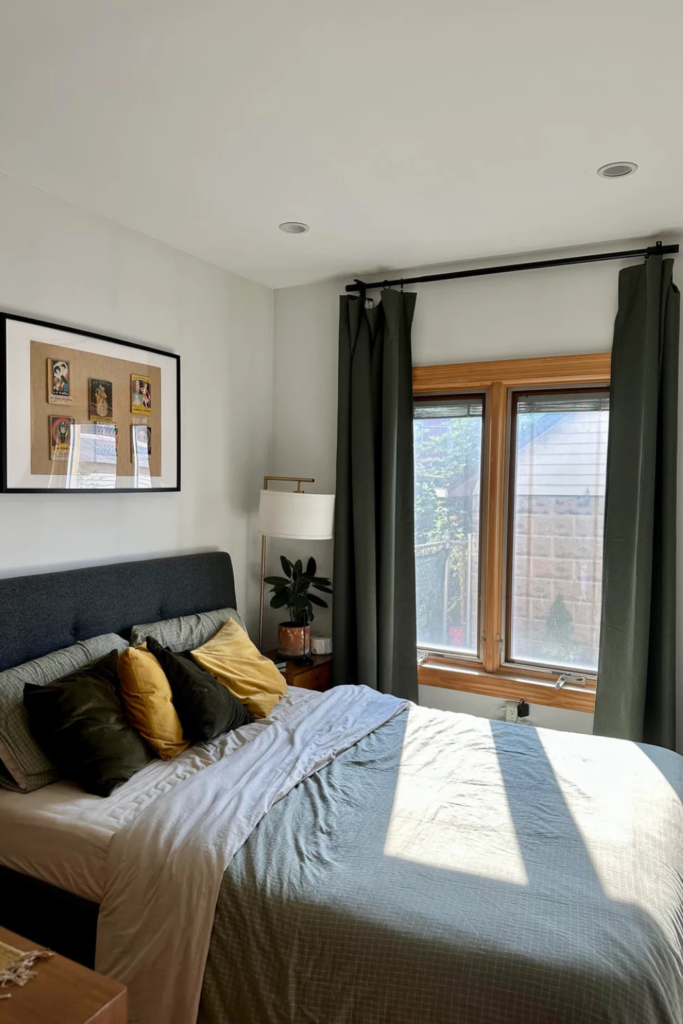
This bedroom keeps things simple with a gray upholstered bed, crisp bedding, dark green curtains, and just enough furniture to make the room comfortable.
The large window does most of the heavy lifting.
Natural light brightens the walls and bedding, while the darker pillows and curtains add contrast so the room doesn’t feel washed out.
It’s proof that a small bedroom can feel stylish without needing a complicated design.
Materials you’ll need:
- Simple upholstered bed frame
- White or light-colored bedding
- Dark green or olive curtains
- Compact bedside table
- Slim bedside lamp
- A few accent pillows
- Framed wall art
- Small area rug
How to recreate it:
Position your bed where it allows the best use of the room without blocking the window or closet.
Keep the walls light, then introduce color through curtains, bedding, and pillows.
Hang your curtain rod close to the ceiling to draw the eye upward and make the windows appear taller. Choose a slim bedside table instead of a bulky nightstand.
Make it look more expensive: Stick to two or three main colors. The combination of soft gray, white, and olive green feels much more intentional than mixing too many unrelated shades.
3. Use a Dresser as Both Storage and Bedroom Decor
A small bedroom doesn’t need a separate piece of furniture for every little thing.
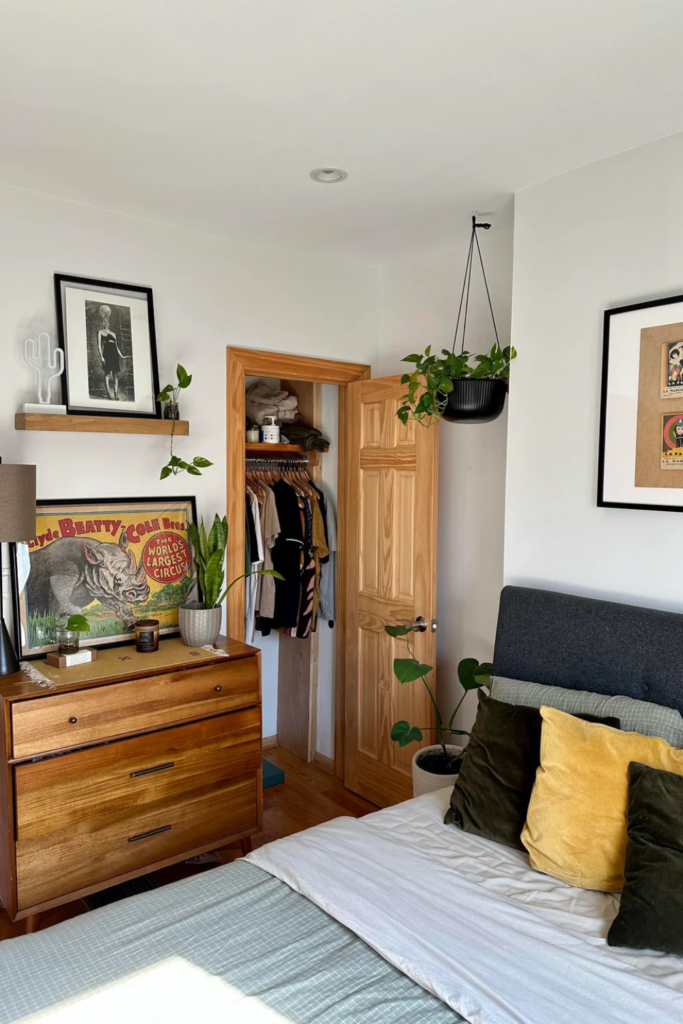
Your dresser can hold clothes, display your favorite artwork, support a lamp, and create a beautiful focal point—all at the same time.
This bedroom does exactly that with a warm wood dresser, vintage-inspired art, floating shelves, and a few carefully placed plants.
The result feels personal and collected without requiring much extra furniture.
Materials you’ll need:
- Compact wood dresser
- Floating wall shelf
- Framed artwork or vintage prints
- Small table lamp
- Decorative plant pots
- Hanging planter
- Storage baskets
- Minimal decorative accessories
How to recreate it:
Choose a dresser that fits comfortably against one wall without blocking the closet or doorway.
Instead of hanging every piece of art, lean one larger framed print against the wall on top of the dresser. Add a lamp and one or two smaller decorative pieces.
Install a floating shelf above it for extra display space, keeping enough clearance so the arrangement doesn’t feel cramped.
If you love plants, add a hanging planter in an unused corner rather than placing another stand on the floor.
Small-space tip: Keep the dresser organized inside so you can use the top for decoration instead of letting it become a dumping ground for clothes and everyday clutter.
Credit: Reddit
4. Combine Your Bedroom and Gaming Setup Without Sacrificing Style
Not everyone has a separate room for gaming, studying, or working from home.
And when your bedroom has to do double duty, the layout matters even more.
This small bedroom fits a bed, desk, computer setup, storage shelves, and personal decor into one space without making it feel completely overwhelmed.
The secret is keeping the furniture close to the walls and using vertical space for storage and display.
Materials you’ll need:
- Compact bed frame
- Narrow desk
- Comfortable desk chair
- Floating shelves
- Wall-mounted bedside shelf
- Desk lighting
- Cable organizers
- Wall art and personal decor
- Small storage containers
How to recreate it:
Place your bed against the longest available wall, leaving enough room for a desk beside it.
Choose a desk with a relatively shallow depth so it doesn’t take over the room. If possible, look for one with built-in drawers or room for storage underneath.
Install floating shelves above the bed or desk to display books, collectibles, and smaller accessories.
A wall-mounted bedside shelf can replace a traditional nightstand, giving you somewhere to keep your phone and everyday essentials.
Small-space tip: Keep cables organized behind the desk. A simple cable tray and a few clips can make a compact bedroom feel noticeably cleaner.
5. Create a Cozy, Collected Bedroom With Vintage Decor
Who says a small bedroom has to be minimalist?
If you love art, books, vintage furniture, and colorful textiles, you can absolutely make that work in a smaller room.
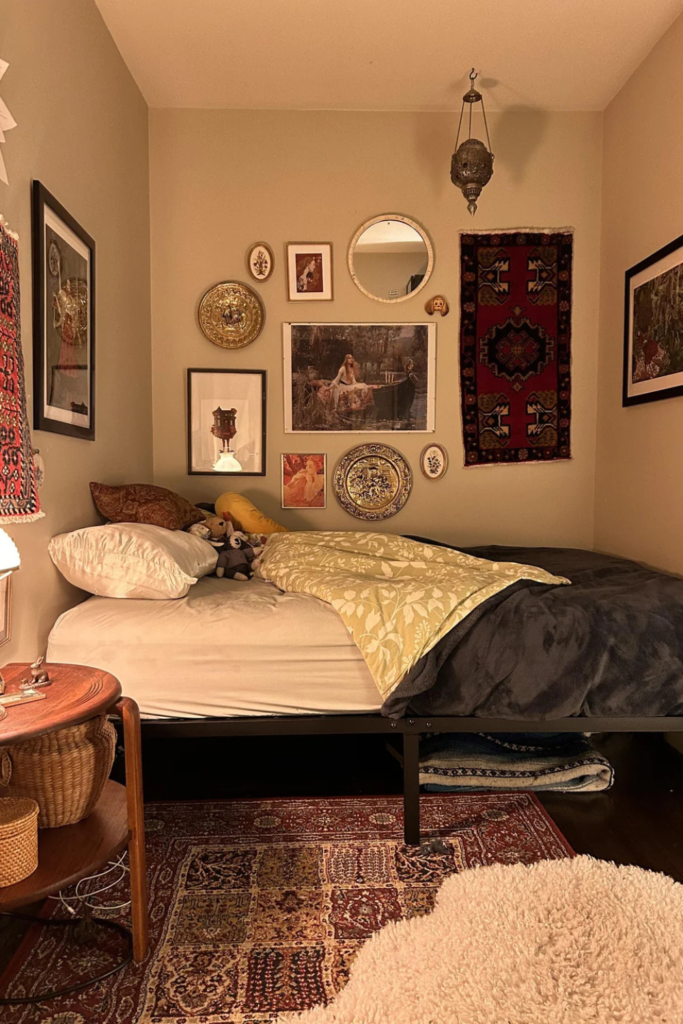
This bedroom embraces a cozy, collected look with an eclectic gallery wall, richly patterned rugs, a simple metal bed frame, and warm neutral walls.
Rather than trying to hide the room’s size, the decor makes the space feel intimate and full of personality.
Materials you’ll need:
- Low-profile bed frame
- Vintage or vintage-inspired rugs
- Framed artwork in different sizes
- Decorative wall mirror
- Small wooden bedside table
- Warm bedside lighting
- Patterned pillows and blankets
- Under-bed storage baskets
How to recreate it:
Start with a simple bed frame that doesn’t visually overpower the room.
Build a gallery wall above or beside the bed using framed prints, photographs, decorative plates, and a small mirror. Mix frame shapes and sizes, but repeat a few colors to keep everything connected.
Layer a patterned rug beneath the bed and bring similar colors into your pillows and blankets.
Instead of purchasing more furniture, use decorative baskets beneath the bed to store extra bedding or seasonal clothes.
Make it look more expensive: Mix vintage pieces with simple modern furniture. That contrast gives the bedroom a more collected look without making it feel overly coordinated.
Credit: https://www.reddit.com/r/CozyPlaces/comments/1gg82lj/my_tiny_bedroom_i_love_spending_stormy_october/
6. Make the Most of Hidden Storage Under Your Bed
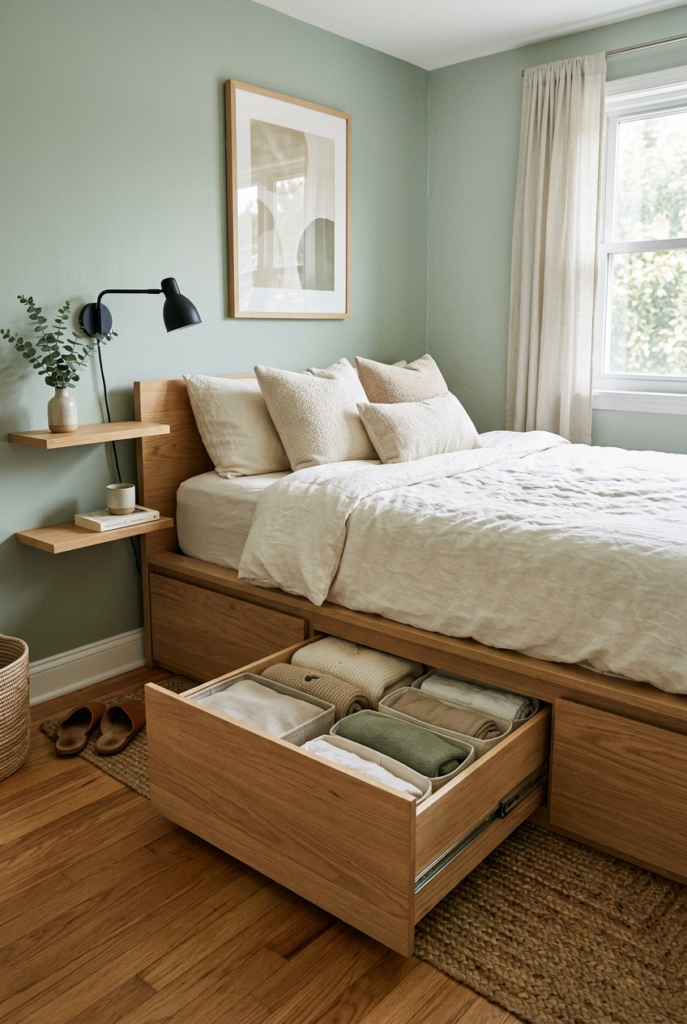
When you’re dealing with a small bedroom, the space underneath your bed is too valuable to ignore.
Instead of letting it collect dust, turn it into a hidden storage area for extra bedding, seasonal clothes, shoes, and anything else you don’t need every day.
A bed with built-in drawers is especially useful because you can keep things organized without adding another dresser to the room.
Materials you’ll need:
- Storage bed frame with built-in drawers
- Low-profile under-bed storage containers
- Drawer dividers
- Vacuum storage bags
- Neutral bedding
- Small bedside table
How to recreate it:
If you’re buying a new bed, look for a platform bed with drawers underneath.
Already have a bed you love? Measure the clearance underneath and use low-profile storage bins that slide out easily.
Vacuum bags work particularly well for bulky comforters and winter bedding.
Keep frequently used items toward the front so you don’t have to pull everything out whenever you need something.
Small-space tip: If your bed sits against a wall, choose a storage bed with drawers on the accessible side or consider a lift-up storage bed.
7. Replace Bulky Nightstands With Floating Bedside Shelves
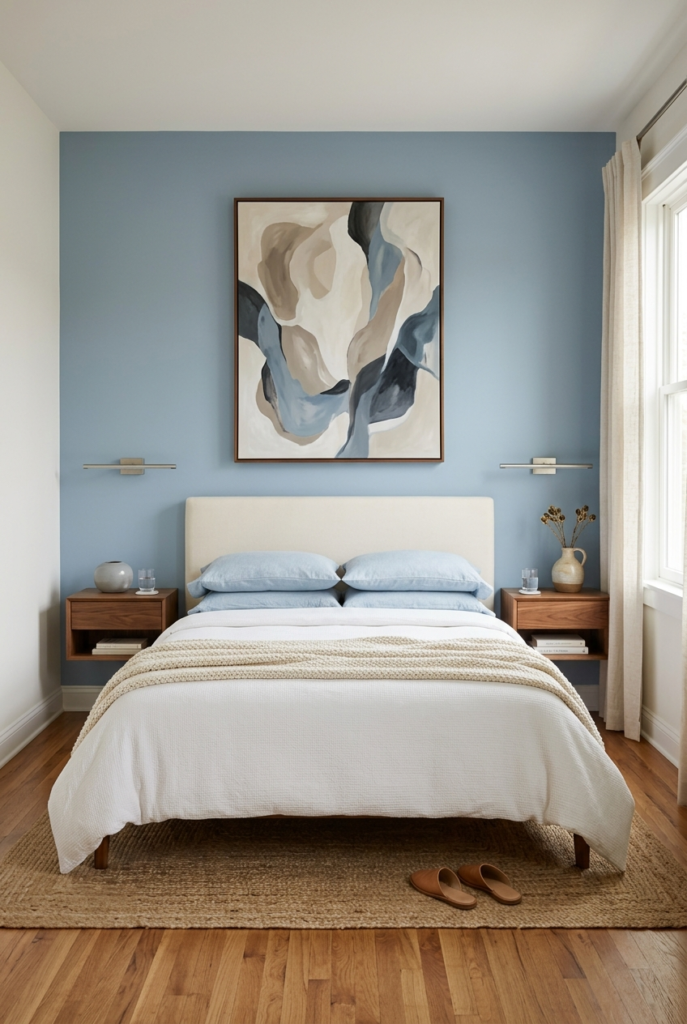
You don’t need a full-size nightstand just to hold your phone, water glass, and favorite book.
In a tiny bedroom, a floating bedside shelf can give you everything you need without taking up valuable floor space.
It’s also a great way to make a bedroom feel lighter and less crowded.
Materials you’ll need:
- Small floating bedside shelves
- Wall anchors and mounting hardware
- Wall-mounted reading lights
- Compact alarm clock
- Small decorative tray
- Simple bedside accessories
How to recreate it:
Install a floating shelf on one or both sides of your bed at a comfortable height.
Choose a shelf that’s deep enough for your everyday essentials but not so large that it gets in the way.
If you need more storage, look for a floating nightstand with a small drawer.
Pair it with a wall-mounted reading light so you don’t have to squeeze a lamp onto the shelf.
Make it look more expensive: Choose a floating nightstand that matches your bed frame or headboard. Keeping the finishes consistent makes even a tiny bedroom feel thoughtfully designed.
8. Choose a Headboard That Doubles as Storage
A headboard doesn’t have to be purely decorative.
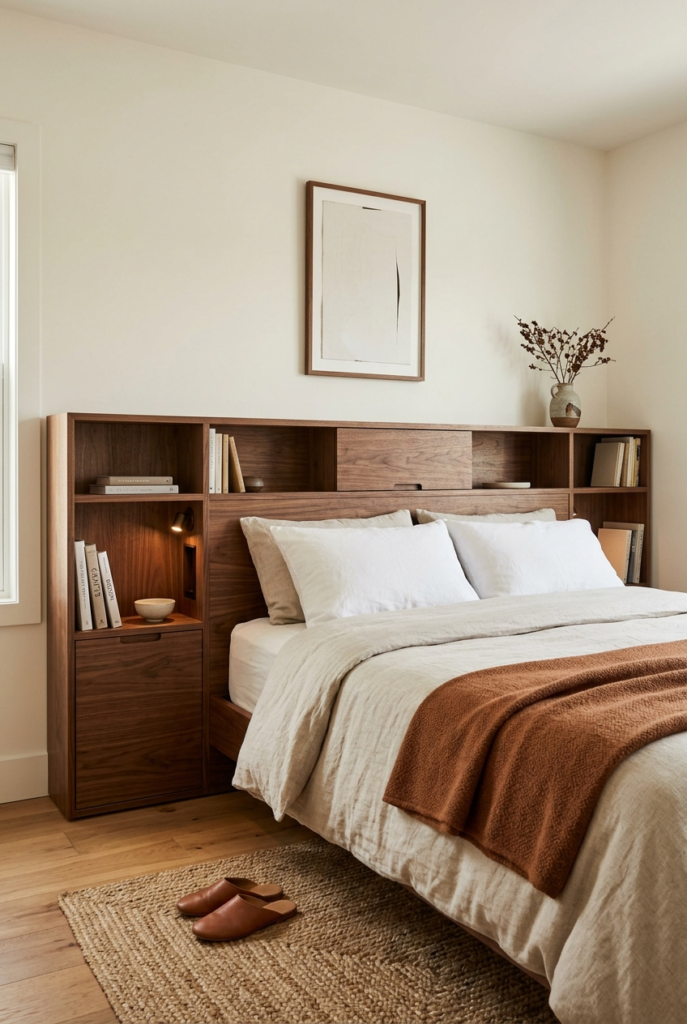
In a small bedroom, it can also become a convenient place to store books, glasses, chargers, and other nighttime essentials.
Storage headboards are especially useful when your room is too narrow for traditional bedside tables.
Materials you’ll need:
- Storage headboard or bookcase headboard
- Compact bed frame
- Small storage baskets
- Books and bedside essentials
- Clip-on or wall-mounted reading lights
- Neutral bedding
How to recreate it:
Look for a headboard with built-in shelves, small compartments, or hidden storage.
Choose one that fits your bed without extending too far into the room.
If you want a custom look, you can also build shallow shelving around your existing headboard.
Keep the shelves organized with a mix of practical items and a few decorative pieces.
Small-space tip: Measure the depth carefully. A storage headboard should give you useful storage without pushing the bed too far into your limited walking space.
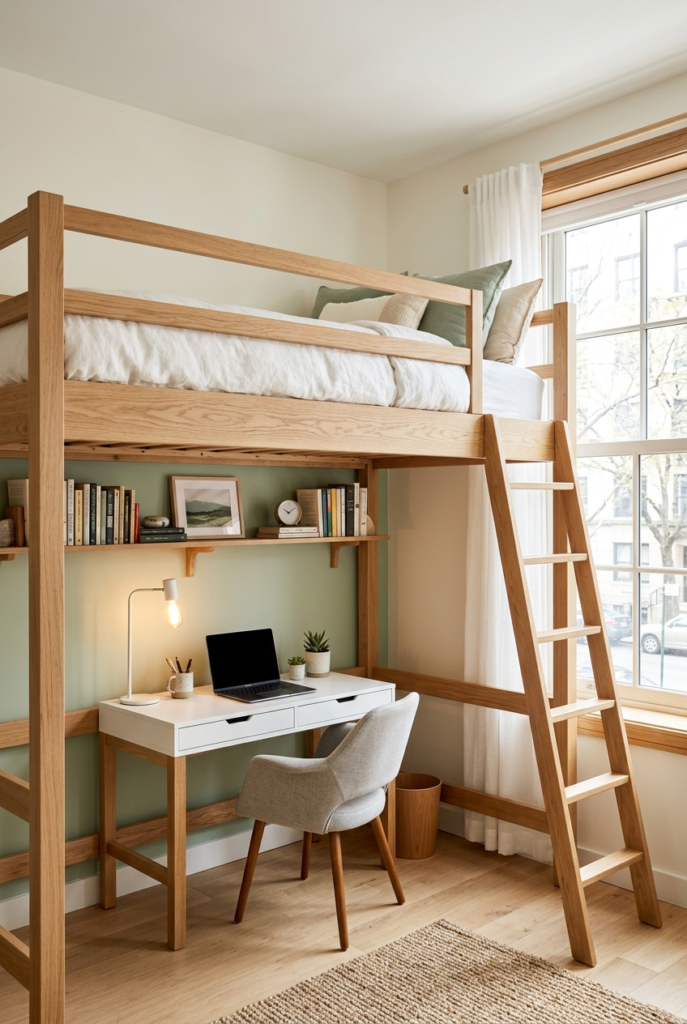
9. Use a Loft Bed to Free Up Floor Space
If your bedroom is small but has decent ceiling height, a loft bed can completely change how you use the room.
By raising the bed, you create space underneath for a desk, dresser, reading nook, or even a small lounge area.
This is particularly useful in studio apartments, college dorms, and kids’ or teens’ bedrooms.
Materials you’ll need:
- Sturdy loft bed frame
- Compact desk or dresser
- Comfortable desk chair
- Wall-mounted shelves
- Task lighting
- Storage baskets
- Small area rug
How to recreate it:
Start by measuring your ceiling height and checking the loft bed manufacturer’s clearance requirements.
You want enough room to sit comfortably on the bed without bumping your head.
Once the bed is installed, decide how you want to use the space underneath.
A small desk creates a practical workspace, while a dresser and shelving can turn it into a dedicated storage area.
Add lighting so the lower space doesn’t feel dark.
Small-space tip: Keep the furniture underneath the loft bed relatively compact. Filling every inch with bulky pieces can make the room feel crowded again.
10. Try a Murphy Bed for a Multifunctional Bedroom
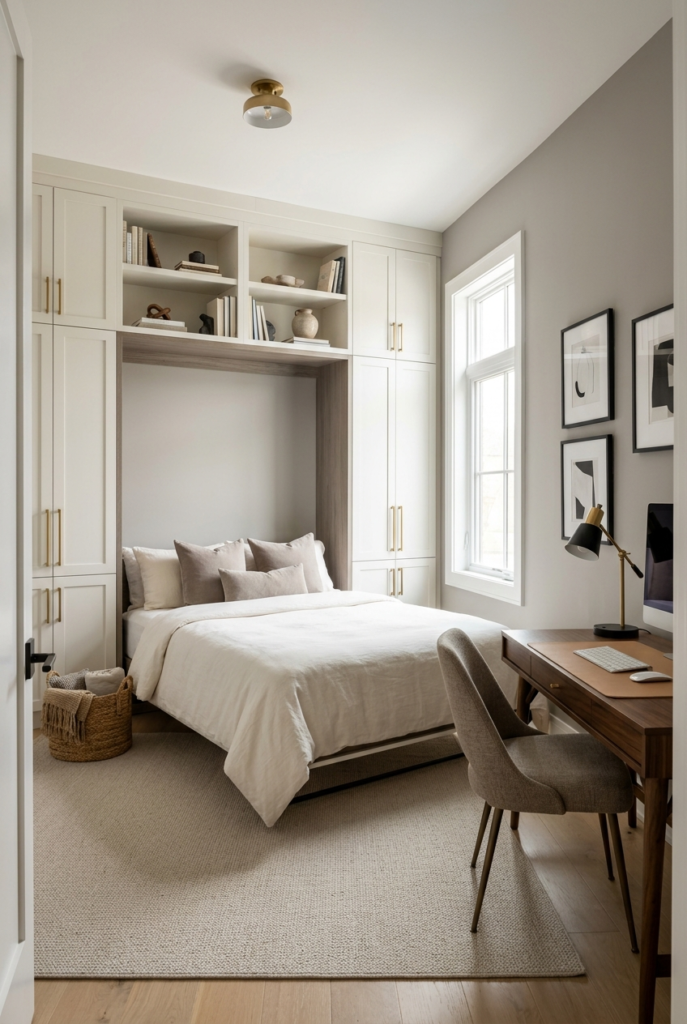
A Murphy bed is one of the smartest options when one room needs to serve several purposes.
It folds up against the wall when you’re not using it, giving you back valuable floor space during the day.
This works beautifully in guest bedrooms, studio apartments, or rooms that double as a home office.
Materials you’ll need:
- Wall-mounted Murphy bed
- Proper wall anchoring hardware
- Compact desk or storage cabinet
- Wall sconces
- Lightweight bedding
- Small area rug
- Minimal wall decor
How to recreate it:
Choose a Murphy bed that suits your room’s dimensions and layout.
Some designs include built-in shelving, cabinets, or a desk, which can make the space even more functional.
Keep the surrounding furniture simple so the bed has enough clearance to open completely.
Use wall-mounted lighting and storage to keep the floor as open as possible.
Make it look more expensive: Choose a Murphy bed with cabinetry that matches your wall color. When folded away, it can blend into the room instead of looking like an obvious fold-out bed.
Have the bed installed according to the manufacturer’s anchoring requirements so it operates safely.
11. Turn an Unused Corner Into a Small Workspace
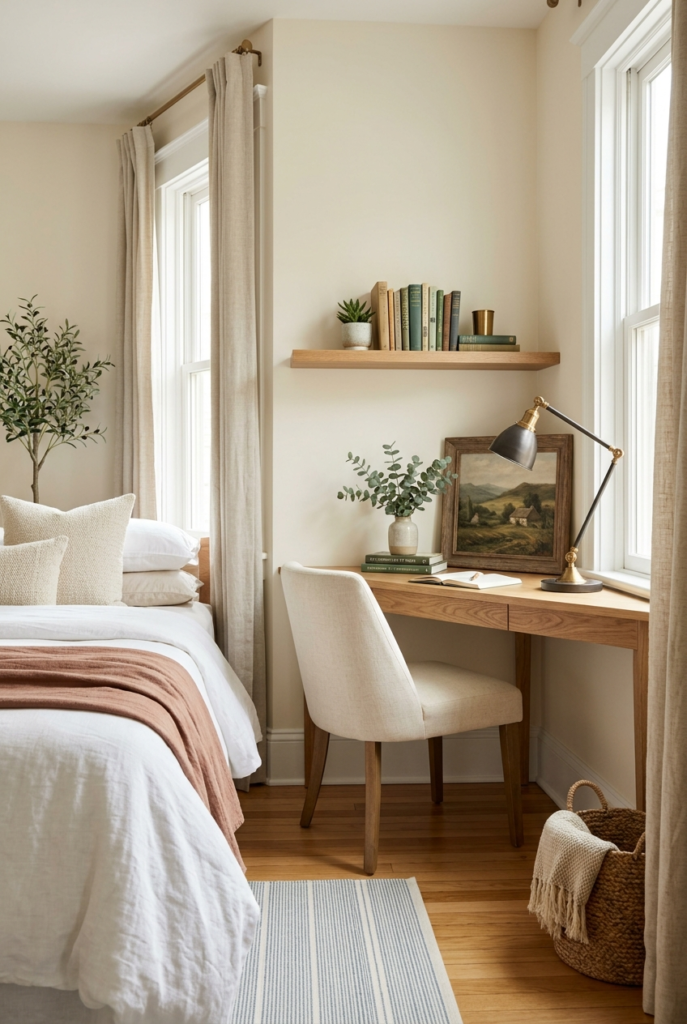
A small bedroom doesn’t always leave room for a separate home office.
But an unused corner might be all you need.
A compact corner desk can create a functional place for studying, working, or getting ready without taking over the entire room.
Materials you’ll need:
- Small corner desk
- Compact desk chair
- Wall-mounted shelves
- Task lamp
- Cable organizers
- Small storage containers
- Framed artwork
How to recreate it:
Look for a corner that isn’t being used for anything important, preferably near a window.
Choose a desk that fits comfortably without blocking the bed, closet, or doorway.
Install one or two shelves above it for books and supplies.
If the desk will also serve as a vanity, add a mirror and keep makeup or skincare in small organizers.
Small-space tip: Choose a chair that slides completely underneath the desk. That little detail can make a big difference when you’re moving around a narrow bedroom.
12. Swap Swinging Closet Doors for Sliding Doors
Closet doors can take up more room than you realize.
Traditional hinged doors need clearance to swing open, which can limit where you place your bed, dresser, or other furniture.
Sliding closet doors are a practical alternative because they don’t require that same amount of open floor space.
Materials you’ll need:
- Sliding closet door panels
- Compatible sliding door track
- Door pulls
- Closet organizers
- Storage baskets
- Matching wall paint
How to recreate it:
Measure your closet opening and choose sliding doors that fit properly.
Mirrored sliding doors are another option if you want to make the bedroom feel brighter and more spacious.
Organize the inside of the closet with shelves, hanging rods, and storage containers so you can make the most of the space.
Make it look more expensive: Choose simple door panels in the same color as your bedroom walls. This creates a cleaner look and helps the closet blend into the room.
One thing to remember: sliding doors usually leave part of the closet covered when open, so consider whether that works for your storage needs.
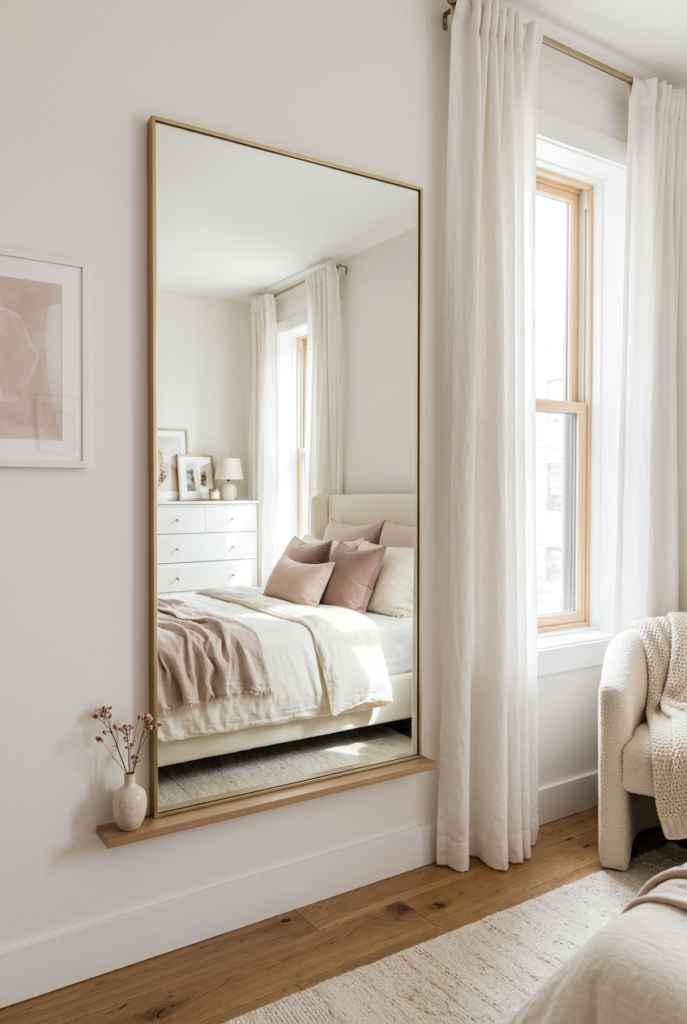
13. Use a Full-Length Mirror to Make the Room Feel More Open
Mirrors are one of the simplest decorating tricks for small bedrooms.
A large mirror reflects light and creates the illusion of more space without requiring any remodeling.
It also gives you something practical to use when getting dressed.
Materials you’ll need:
- Full-length mirror
- Wall mounting hardware
- Slim console or dresser, if space allows
- Neutral wall paint
- Simple lighting
- Minimal accessories
How to recreate it:
Look for an empty wall near your closet or bedroom door.
Hang a large mirror vertically to draw the eye upward.
If you have a narrow room, a tall mirror can work better than several smaller mirrors scattered around the walls.
You can also position it where it reflects natural light from a window.
Make it look more expensive: Choose one substantial mirror with a beautiful frame instead of filling the room with several small ones.
A thin black frame feels modern, while wood or antique brass can add warmth and character. Secure large mirrors properly to prevent tipping.
14. Use a Daybed to Create a Bedroom That Works All Day
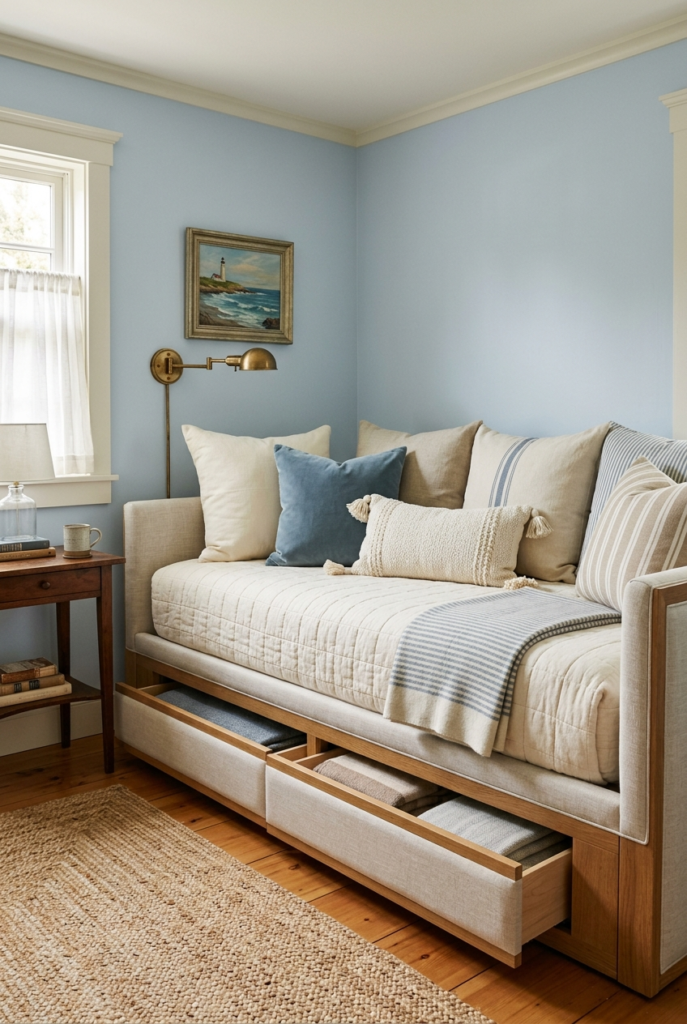
A daybed is a clever choice when your bedroom also needs to function as a sitting area.
During the day, it looks and works like a sofa.
At night, it becomes a comfortable place to sleep.
This setup is especially useful in studio apartments, guest bedrooms, or small rooms where you don’t want the bed to dominate the entire space.
Materials you’ll need:
- Upholstered or wooden daybed
- Comfortable mattress
- Large back pillows
- Neutral bedding
- Decorative throw pillows
- Small side table
- Wall-mounted reading light
- Storage baskets
How to recreate it:
Position the daybed against a wall rather than placing it in the center of the room.
Use large pillows along the back to create a comfortable sofa-like appearance.
Choose bedding that coordinates with the room’s color palette so the bed feels like part of the decor.
A small side table and wall-mounted light will complete the seating area without taking up much additional space.
Small-space tip: Look for a daybed with built-in drawers or a trundle if you need extra storage or occasional sleeping space for guests.
15. Make a Tiny Bedroom Feel Bigger With a Low-Profile Bed
Sometimes the best small-bedroom solution is choosing furniture that doesn’t visually overpower the room.
A low-profile bed creates more visible wall space above the headboard, which can make the ceiling feel higher.
It’s a particularly good choice for minimalist, Scandinavian, Japanese-inspired, and modern bedrooms.
Materials you’ll need:
- Low-profile platform bed
- Simple upholstered or wooden headboard
- Neutral bedding
- Compact nightstands
- Wall-mounted lighting
- Large area rug
- Minimal wall decor
How to recreate it:
Choose a platform bed with a simple frame and low headboard.
Avoid oversized footboards or bulky decorative details that make the bed appear heavier.
Keep the bedding soft and layered, using colors like cream, taupe, sage, or muted blue.
Add a large area rug beneath the bed to create a cozy foundation.
If you have limited floor space, pair the bed with floating nightstands rather than traditional bedside tables.
Make it look more expensive: Use layered textures instead of lots of decorative accessories. A linen duvet, soft quilt, textured throw, and a few well-chosen pillows can make a simple bedroom feel polished and inviting.